
While the capital spending is being maintained at 3.1 per cent of the GDP, a little more would have boosted economic growth even further, suggests Rajiv Memani.

In the Union Budget for Financial Year 2023-24 (FY24), Finance Minister Nirmala Sitharaman had held forth on the need for better governance and investor protection in the banking sector. She had proposed certain amendments to the Reserve Bank of India Act (RBI Act), 1934; the Banking Regulation Act (BR Act), 1949; and the Banking Companies (Acquisition and Transfer of Undertakings) Act, 1970.

Real estate developers are hoping that the slew of tax concessions announced in Union Budget 2025, set to take effect this financial year, will spur demand for affordable and mid-segment housing, even as the broader housing market shows signs of fatigue.

The pilot project for central bank digital currency (CBDC) in the retail segment went live on Thursday with the Reserve Bank of India (RBI) issuing Rs 1.71 crore to four participating banks based on their indents. The central bank has identified four banks for the first phase of the pilot - State Bank of India, ICICI Bank, Yes Bank and IDFC First Bank - in four cities, Mumbai, New Delhi, Bengaluru and Bhubaneswar. The highest indent was received from one private sector bank.

This is the second all-India bank strike in as many months.

Budget 2025-26 delivers a carefully calibrated strategy-stimulating demand and investment while keeping fiscal discipline intact. In an environment marked by global trade disruptions, and a softening in urban consumption, Finance Minister Nirmala Sitharaman has taken a measured approach.
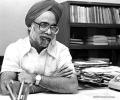
What stood out in his 15-year journey as a member of the political executive at the Centre was his glowing record as India's most successful and effective finance minister. Both as prime minister and finance minister, he understood the importance of gradualism, except when the economy or the polity was in a crisis.

Journalist and author Chitra Subramaniam has demanded that the Central Bureau of Investigation (CBI) make public its findings from the "box of evidence" received from Switzerland regarding the Bofors payoffs. Subramaniam, author of 'Boforsgate: A Journalist's Pursuit of Truth', expressed concerns about the lack of transparency surrounding the evidence, questioning who opened the box, when it was opened, and what it contained. She also raised doubts about the official narrative regarding the alleged bribe in the Bofors case, suggesting the sum of Rs 64 crore may not reflect the full extent of the corruption. Subramaniam also alleged that the CBI planted stories about Hindi film actor Amitabh Bachchan to derail the investigation and launched a political vendetta against the Bachchans. She recalled that Bachchan had come to her home and asked if she had seen his name. The CBI has recently requested assistance from the United States in the case, seeking information from private investigator Michael Hershman, who claims to have crucial details about the scandal. The Bofors scandal, a major bribery case involving the Indian government and the Swedish arms manufacturer Bofors in the 1980s, pertains to allegations of a Rs 64-crore bribe in a Rs 1,437-crore deal for the supply of 400 155mm field Howitzers.

A case was registered by the police against Congress MLA Channareddy Tannur and his son Pampanagouda Tannur on Saturday after a Dalit sub-inspector allegedly died by suicide, following his transfer within seven months of posting.
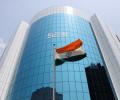
The market regulator's newly proposed selection criteria for the over Rs 400-trillion-a-day futures and options (F&O) market could pave the way for the entry of popular stocks such as Life Insurance Corporation (LIC) of India, Jio Financial Services, Zomato, Paytm, DMart, and Adani Energy into the derivatives segment. The Indian derivatives market, which accounts for most of the trading volumes, could see big churn with over two dozen exits from the current list of 182 stocks due to an upward revision in the eligibility thresholds.
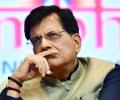
'The startup ecosystem, the government, and the owners of large pools of Indian capital need to actively support the creation of these local champions, not pull down the teams that are trying hard to get there.'

Finance Minister Nirmala Sitharaman on Wednesday said the Union Budget strikes a fine balance between growth, employment, and fiscal consolidation, and promotes cooperative federalism. Replying to the discussion on the Union Budget 2024-25 and Union Territory of Jammu and Kashmir Budget in Rajya Sabha, the minister said the government is on track to achieve the pre-announced fiscal deficit target of 4.5 per cent by 2025-26. Sitharaman, also a former defence minister, said the Agniveer Scheme to recruit people in the age group of 17.5 to 21 years, is aimed at keeping the armed forces fit, young and battle-ready.

Replying to a question about women empowerment, Sitharaman insisted that patriarchy is a concept invented by the Left.

Vikram Kothari took a loan of Rs 485 crore from Mumbai-based Union Bank of India and a loan of Rs 352 crore from Kolkata-based Allahabad Bank. A year later, Kothari has reportedly not paid back either the interest or the loan.

More than 50 per cent of SIP accounts come from semi-urban and rural areas.

Simplifying investment policies at the micro level and introducing a time-bound framework will be critical for India's growth targets, notes Krishna Ella.

Partha Pratim Sengupta, who will be taking charge as the MD & CEO of Bandhan Bank in early November, has his task cut out. The Kolkata-based lender, which converted itself from a microfinance institution to a universal bank, is in its 10th year of operation. The bank was able to cut down the share of the micro loan book over these years.

Modi said the transformations in the country in the past 10 years have reignited a risk-taking culture among the citizens.

A new cyber fraud known as 'pig butchering scam' or 'investment scam' has emerged, targeting unemployed youths, housewives, students, and needy people who are made to lose large sums of money daily, according to the latest annual report of the Union home ministry.

'Investors should not commit fresh money to these stocks right now, unless they can hold for the next three to four years.'

The Aam Aadmi Party dismissed the allegation as "baseless" and claimed it was "another conspiracy hatched by the BJP" to tarnish AAP's image ahead of voting for Lok Sabha seats in Delhi and Punjab.

The RBI under former governor Shaktikanta Das resisted pressures to cut interest rates through 2024 as it kept its 'Arjuna's eye' trained on inflation, but the central bank under a new detail-oriented head will soon have to take a call if it can continue sacrificing growth. Das, a career bureaucrat who in 2016 oversaw Prime Minister Narendra Modi's highly disruptive demonetisation move, left a lasting legacy as he demitted office towards the end of 2024 after expertly navigating monetary policy for six years, the highlight of which was steering India's recovery through the pandemic.

The most striking features of this Budget was its focus on simplification and improving the ease of doing business in India, asserts Kaku Nakhate.

The bosses of SBI, Union Bank and Central Bank have been driving down to their offices everyday to take stock of the biggest loan drive ever undertaken for MSMEs, discovers Tamal Bandyopadhyay.

Banking PSU stocks made a brave comeback on Monday after succumbing to losses Friday following the Union Budget's ignoring a long-standing demand by the sector on FDI limits.

'Consider 40% to 50% in equities, 10% in gold as a hedge, and the remaining 30% to 40% split between multi-asset funds and hybrid funds.'

Real estate developer Supertech on Friday was declared bankrupt by the National Company Law Tribunal (NCLT), a move that could have a bearing on 25,000 home buyers of the firm's ongoing projects in the Delhi and NCR region. Acting on a petition filed by the Union Bank of India for non-payment of around Rs 432 crore worth dues, the bankruptcy court ordered the initiation of insolvency proceedings against real estate firm Supertech Ltd, one of the companies of Supertech group. The NCLT said "there has been a default in payment of the financial debt" and appointed Hitesh Goyal as the Interim Resolution Professional (IRP) superseding the board of Supertech Ltd.

Is the worst over for Indian banks? The past two years saw them ride on treasury trades as deposits soared and credit growth dipped sharply. Gross and net non-performing assets (NPAs) moved south, and the provision coverage ratio (PCR), capital buffers, and profitability indicators are back at pre-pandemic levels. So, what's the plot ahead?
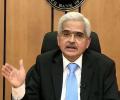
Reserve Bank Governor Shaktikanta Das on Tuesday said the fiscal-monetary coordination was at its best during the last six years even as he thanked Prime Minister Narendra Modi for giving the opportunity to head the monetary authority of the country. Das, in a series of posts on X, on his last day of his six-year term as RBI Governor, also thanked the Finance Minister, various stakeholders and his colleagues at the central bank.

From the Sensex pack, Adani Ports & Special Economic Zones, Mahindra & Mahindra, Reliance Industries, HDFC Bank, Larsen & Toubro, NTPC, State Bank of India, UltraTech Cement and Kotak Mahindra Bank were the major gainers. In contrast, Tata Steel, Titan, Bajaj Finserv, JSW Steel, Bajaj Finance, Hindustan Unilever, ITC, Tata Motors and Tata Consultancy Services were among the laggards.

The Financial Intelligence Unit-India (FIU-India), the national agency responsible for analysing suspicious financial transactions, has received requests from four more offshore crypto exchanges to operate in India again, said a senior government official familiar with the matter. In the beginning of 2024, India had banned nine crypto exchanges - Binance, Kucoin, Huobi, Kraken, Gate.io, Bitstamp, MEXC Global, Bittrex, and Bitfenix - for non-compliance with anti-laundering law in the country.

'The hacker replaced original emails and planted fraudulent emails with a request letter and invoices to be paid to fraudulent bank accounts.'

Union Finance Minister Nirmala Sitharaman will review the performance of regional rural banks (RRBs) after the Budget session of Parliament, according to two people familiar with the matter. The finance minister will review the performance of RRBs after August 13. The review will include discussions on enhancing the digital capabilities of RRBs, said a senior government official.

Ajit Mishra, vice president, Research, Religare Broking, answers your queries.

A freebie once granted can hardly be discontinued. All that can happen is to substitute it with a bigger freebie, notes A K Bhattacharya.

Alloting more funds for MNREGA and PM-KISAN could wipe out the entire additional money that the Centre may have for FY25.

Capital markets regulator Sebi has kept in 'abeyance' the proposed initial share sale of securities depository NSDL. However, the Securities and Exchange Board of India (Sebi) did not clarify further. The National Securities Depository Ltd (NSDL) filed its preliminary papers with the capital markets regulator on July 7.
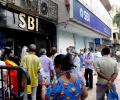
Amendments would be required in the Banking Companies (Acquisition and Transfer of Undertakings) Act, 1970 and the Banking Companies (Acquisition and Transfer of Undertakings) Act, 1980 for privatisation, sources said.
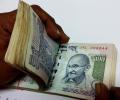
'Some part could be used for consumption purposes, and the rest could be used to meet important financial goals.' 'The split can be 30:70 to 50:50, depending on one's situation.'

RBI Governor Shaktikanta Das kept the red flag on cryptocurrencies flying, warning that the next financial crisis can be triggered by private cryptocurrencies if such speculative instruments are allowed to grow.
